Sunscreen Beyond the Beach: The Blue Light Myth vs. Reality
Do We Really Need Sunscreen Indoors?
Introduction
Sunscreen has traditionally been associated with outdoor sun exposure. However, modern lifestyles involve prolonged indoor exposure to artificial lighting and digital screens, raising an important dermatological question:
Is sunscreen necessary even when staying indoors?
Recent research has shifted attention toward blue light, also known as High-Energy Visible (HEV) light, and its potential impact on skin pigmentation and premature aging.
What Is Blue Light?
Blue light represents a portion of visible light within wavelengths of approximately 400–500 nm. While sunlight remains the primary source, artificial exposure originates from:
Smartphones and tablets
Computer screens
LED lighting
Television displays
Although blue light carries lower energy than ultraviolet (UV) radiation, it penetrates deeper into the skin layers compared to UVB radiation.
Blue Light and Skin Pigmentation
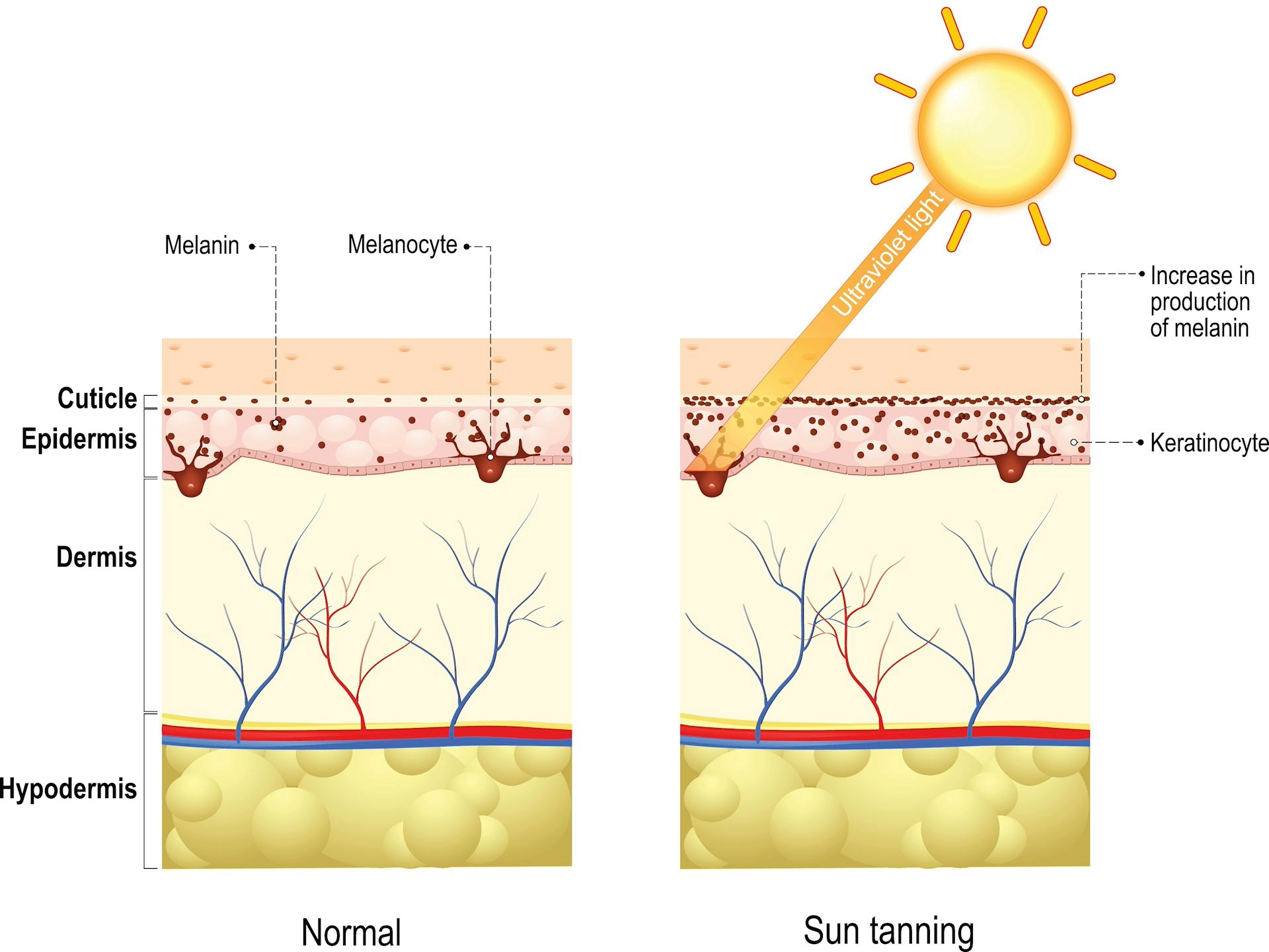
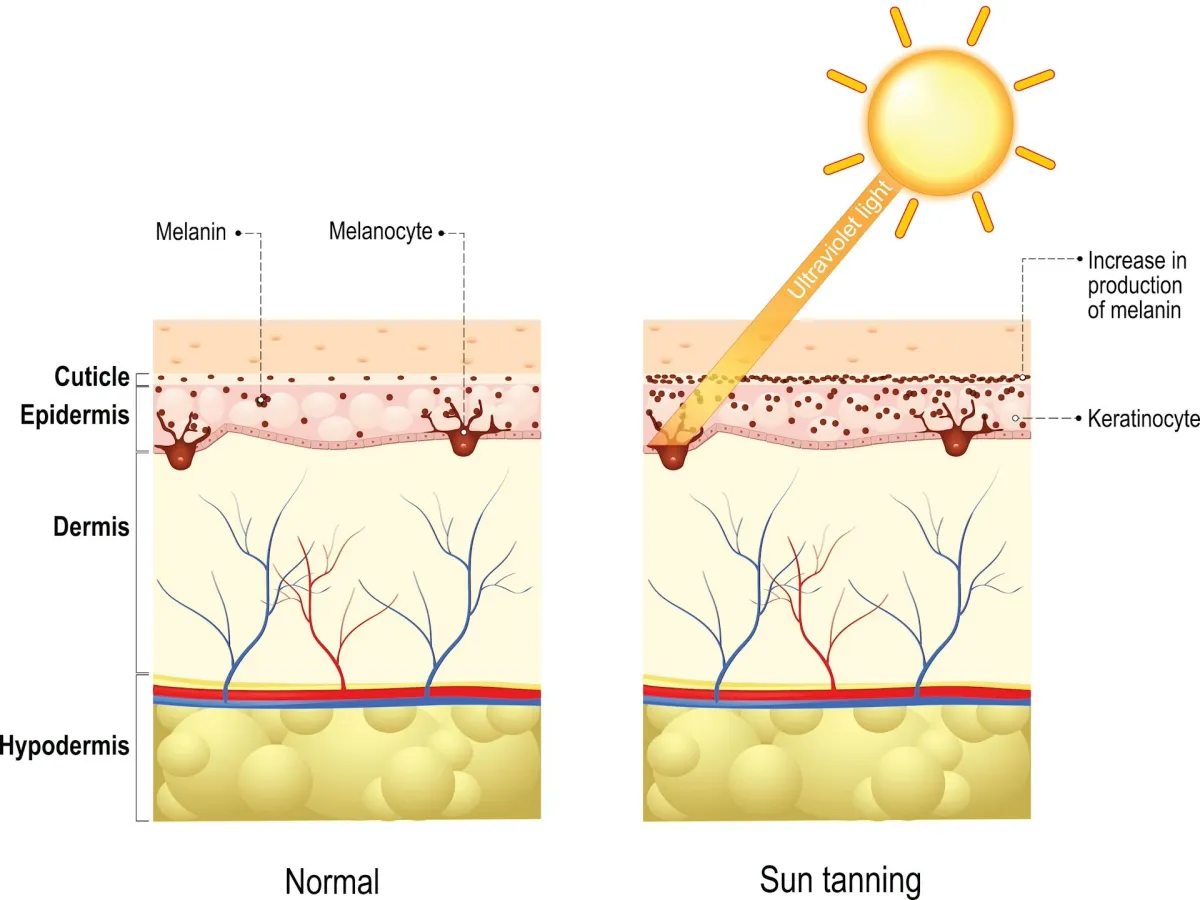
Emerging dermatological evidence suggests that repeated exposure to blue light can stimulate melanocyte activity, leading to increased melanin production.
Studies demonstrate that blue light exposure may:
Trigger melanogenesis through cellular signaling pathways
Increase oxidative stress via reactive oxygen species (ROS)
Promote persistent hyperpigmentation, particularly in darker skin phototypes.
Activation of skin photoreceptors such as Opsin-3 (OPN3) has been shown to enhance pigment formation and inflammatory responses associated with uneven skin tone.
Clinical investigations have also confirmed measurable pigmentation changes following controlled blue-light exposure in human skin models.
One of the most important biological effects of fasting is the activation of autophagy, a natural cellular cleaning process.
Autophagy helps:
Remove damaged cellular components
Reduce oxidative stress
Support cellular regeneration
Research awarded the 2016 Nobel Prize in Physiology or Medicine highlighted the importance of autophagy in maintaining cellular health.
Does Blue Light Cause Premature Skin Aging?
Photoaging is primarily linked to ultraviolet radiation, yet growing evidence indicates that blue light may contribute through similar biological mechanisms.
Blue light exposure can induce:
Oxidative stress damage
Collagen degradation
Reduced skin elasticity
Activation of matrix metalloproteinases (MMPs)
These processes are associated with wrinkle formation and long-term skin aging.
Some research further suggests that chronic exposure may influence gene expression related to skin repair and inflammation through epigenetic pathways.
Improve gut motility
Enhance digestive efficiency
Support microbiome balance
Proper hydration and balanced meals during non-fasting hours remain essential.
The Reality Check: Are Screens as Harmful as Sunlight?
Here lies the myth vs. reality distinction.
Fact: Blue light from sunlight is significantly stronger than that emitted by digital devices.
However: Modern individuals experience continuous cumulative exposure due to prolonged screen time, which may contribute to pigmentation disorders such as melasma or postinflammatory hyperpigmentation in susceptible individuals.
Current dermatological consensus indicates that while indoor blue light exposure alone is unlikely to replace UV radiation as the main aging factor, it may still act as an additional environmental stressor.
Should You Wear Sunscreen Indoors?
Dermatology experts increasingly recommend sunscreen indoors under specific conditions:
Patients with diabetes
✔Working near windows with daylight exposure
✔ Extended screen time (>6–8 hours daily)
✔ Patients with melasma or hyperpigmentation
✔ Post-procedure or sensitive skin
Importantly, traditional UV filters alone may not fully protect against blue light.
Ramadan fasting represents a naturally occurring model of intermittent fasting with scientifically supported benefits ranging from metabolic improvement to cellular repair. When practiced responsibly with balanced nutrition and hydration, fasting can positively influence overall health and wellbeing.
Studies suggest that broad-spectrum tinted sunscreens containing iron oxides provide improved protection against visible light–induced pigmentation.
Practical Dermatological Recommendations
For optimal daily photoprotection:
Apply broad-spectrum SPF even during indoor activities
Reapply when exposed to daylight through windows
Consider antioxidant skincare (Vitamin C, Niacinamide)
Reduce screen brightness and enable night-mode filters
Conclusion
The idea that sunscreen is only necessary at the beach is outdated. While blue light from indoor sources is less intense than sunlight, accumulating scientific evidence indicates its potential role in hyperpigmentation and premature skin aging.
Indoor photoprotection should therefore be viewed not as a marketing trend, but as part of a modern preventive dermatology approach—especially for individuals prone to pigmentation disorders.
References
Harvard Health Publishing — Blue light exposure and skin health awareness
Journal of the American Academy of Dermatology (JAAD) – Photoprotection and visible light studies
Coats JG et al. Blue Light Protection: Effects of Blue Light on the Skin. Journal of Cosmetic Dermatology, 2021.
Mahmoud BH et al. Visible light–induced pigmentation mechanisms.
Dong K et al. Impact of blue light and digital screens on the skin. Journal of Cosmetic Dermatology, 2023.
Clinical Dermatology Research on Blue Light–Induced Hyperpigmentation.