
The Health Benefits of Fasting During Ramadan: Scientific Insights on the Human Body
Introduction
Fasting during Ramadan represents one of the most widely practiced forms of intermittent fasting worldwide. Beyond its spiritual significance, growing scientific evidence suggests that fasting exerts multiple physiological benefits on metabolic health, cellular repair mechanisms, and overall body function. For healthcare professionals and pharmaceutical communities, understanding the biological effects of fasting helps promote safe and evidence-based health awareness during Ramadan.
What Happens in the Body During Fasting?
When fasting begins, the body undergoes a metabolic transition due to the absence of food intake for extended hours. Typically, the body shifts through three main phases:
1. Glucose Utilization Phase (0–6 hours) The body uses circulating glucose as its primary energy source.
2. Glycogen Depletion Phase (6–24 hours) Stored glycogen in the liver becomes the main fuel source.
3. Fat Metabolism Phase (>24 hours) The body begins breaking down fat stores, producing ketones as alternative energy sources.
This metabolic switch improves energy efficiency and metabolic flexibility.
1. Improved Metabolic Health
Scientific studies show that fasting may help:
Improve insulin sensitivity
Reduce blood glucose levels
Support weight regulation
Enhance lipid metabolism
Ramadan fasting has been associated with reductions in LDL cholesterol and triglycerides while supporting healthier metabolic balance.
2. Cellular Repair and Autophagy
One of the most important biological effects of fasting is the activation of autophagy, a natural cellular cleaning process.
Autophagy helps:
Remove damaged cellular components
Reduce oxidative stress
Support cellular regeneration
Research awarded the 2016 Nobel Prize in Physiology or Medicine highlighted the importance of autophagy in maintaining cellular health.
3. Cardiovascular Benefits
Fasting during Ramadan may contribute to cardiovascular health through:
Reduction in blood pressure
Improved cholesterol profile
Decreased inflammatory markers
These effects collectively reduce risk factors associated with cardiovascular diseases.
4. Digestive System Reset
Continuous eating places constant demand on the gastrointestinal system. Periods of fasting allow functional rest which may:
Improve gut motility
Enhance digestive efficiency
Support microbiome balance
Proper hydration and balanced meals during non-fasting hours remain essential.
5. Hormonal and Mental Health Effects
Fasting influences several hormones including:
Increased growth hormone secretion
Improved insulin regulation
Enhanced brain-derived neurotrophic factor (BDNF)
Many individuals report improved mental clarity, emotional stability, and better sleep regulation during Ramadan.
Safety Considerations
Although fasting is generally safe for healthy adults, medical supervision is recommended for:
Patients with diabetes
Chronic kidney disease
Cardiovascular disorders
Pregnant or elderly individuals
Healthcare consultation ensures fasting is practiced safely.
Conclusion
Ramadan fasting represents a naturally occurring model of intermittent fasting with scientifically supported benefits ranging from metabolic improvement to cellular repair. When practiced responsibly with balanced nutrition and hydration, fasting can positively influence overall health and wellbeing.
For pharmaceutical and healthcare institutions, promoting evidence-based awareness during Ramadan supports safer community health practices.
References
Longo VD & Mattson MP. Fasting: Molecular Mechanisms and Clinical Applications. Cell Metabolism, 2014.
Patterson RE & Sears DD. Metabolic Effects of Intermittent Fasting. Annual Review of Nutrition, 2017.
Trepanowski JF & Bloomer RJ. The impact of religious fasting on human health. Nutrition Journal, 2010.
Mattson MP et al. Impact of intermittent fasting on health and disease processes. New England Journal of Medicine, 2019.
World Health Organization (WHO) – Healthy fasting guidelines.
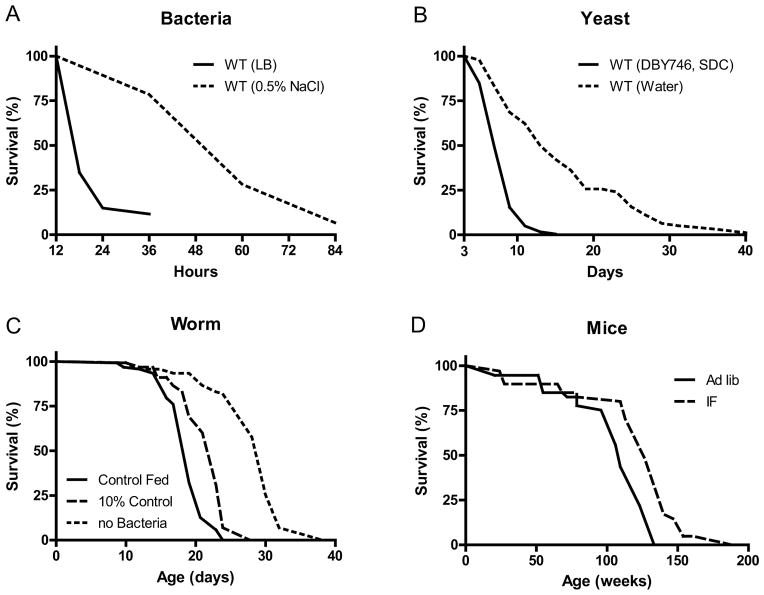
Figure 1. Fasting extends lifespans of yeast, worms and mice
A) lifespan of E. coli incubated in either LB medium or nutrient-free buffer (Gonidakis et al., 2010); B) lifespan of S. cerevisiae incubated in either medium or water (Wei et al., 2008); C) Lifespan of C. elegans in standard medium or in medium with a 90% reduction or complete removal of bacterial food (Kaeberlein et al., 2006); D) Lifespan of mal C57BL/6J mice on alternating day fasting initiated at 1–2 month of age (Goodrick et al., 1990).
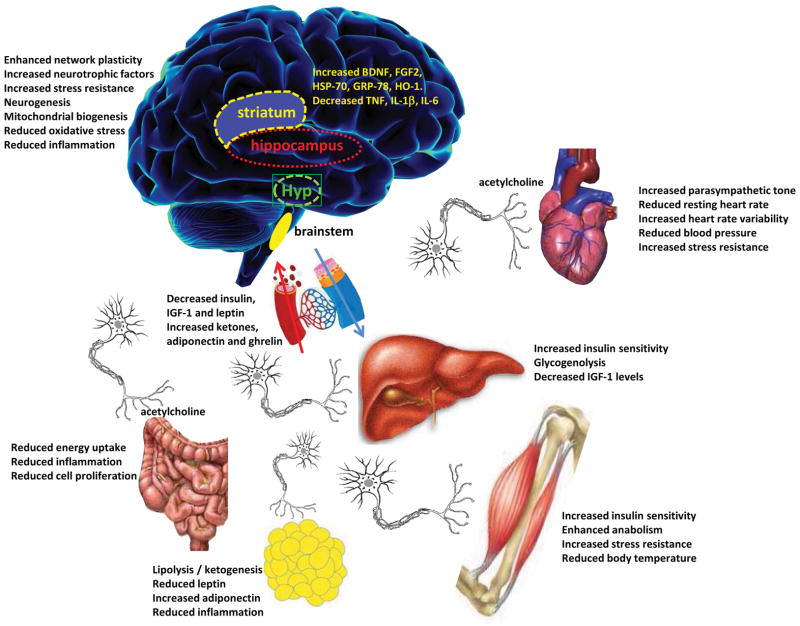
Figure 2. Pivotal roles of the nervous and endocrine systems as mediators of adaptive responses of major organ systems to intermittent fasting
IF modifies brain neurochemistry and neuronal network activity in ways that optimize brain function and peripheral energy metabolism. Four brain regions that are particularly important in adaptive responses to IF include the hippocampus (cognitive processing), striatum (control of body movements), hypothalamus (Hyp, control of food intake and body temperature) and brainstem (control of cardiovascular and digestive systems). The brain communicates with all of the peripheral organs involved in energy metabolism. IF enhances parasympathetic activity (mediated by the neurotransmitter acetylcholine) in the autonomic neurons that innervate the gut, heart and arteries, resulting in improved gut motility and reduced heart rate and blood pressure. By depleting glycogen from liver cells, fasting results in lipolysis and the generation of ketone bodies resulting in a reduction in body fat. IF enhances insulin sensitivity of muscle and liver cells, and reduces IGF-1 production. Levels of oxidative stress and inflammation are reduced throughout the body and brain in response to IF.